10 expert tips for long-term reliability 
A car key today is not just a piece of metal that lets you unlock the door. It is a complex, technology-based device that ensures the car’s security, convenience, and even its value. However, many drivers still do not take enough care of this tiny but important tool.
Proper car key care helps avoid unplanned malfunctions, expenses, and stressful situations—especially when the key stops working unexpectedly.
However, if the key does get stuck, is lost, or gets locked inside the car, you may need an emergency car unlocking service, carried out by professional specialists quickly and without damage to the vehicle. In this guide, we will provide expert tips on how to care for different types of keys and ensure their longevity.
Types of car keys and their features
Car keys have evolved significantly over the past decade. Today, we have three main types:
Mechanical keys
These are traditional keys used in many older vehicles. Their maintenance is simple—avoid moisture, rust, and physical damage.
Electronic (remote) keys
These keys allow you to unlock the car from a distance, so battery and button maintenance is especially important.
Smart keys
The most modern ones—allow the car to unlock automatically as you approach. They contain complex electronics, so it is essential to protect them from drops, magnetic fields, and water exposure.
Key principles of car key care
For the key to work reliably for many years, it is necessary to follow a few simple rules.
Proper storage
Always keep the key away from sharp objects, metal surfaces, and strong magnets.
Cleaning and protection from moisture
Clean the key with a soft cloth; avoid chemical exposure. For electronic keys, you can use microfiber wipes.
Protection from drops and impacts
Many key failures happen after an impact—so it’s worth using a protective case.
 Maintaining the electronic key battery
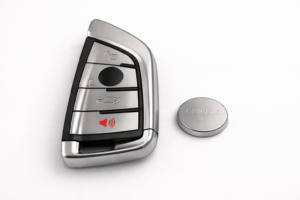
A key that responds sluggishly or does not respond at all most often suffers from a drained battery.
When to replace the battery
Manufacturers recommend replacing the battery every 1–2 years, even if it is still working.
How to avoid power drain
Do not keep the key near the car—some keys maintain a constant connection, thereby draining power.
Choosing the right batteries
Always use original batteries with the correct voltage level. Cheap replacements can shorten the key’s operating time.
Key fob housing maintenance
The key fob housing is the first line of defense against physical damage and environmental impact. Although it looks simple, its condition directly affects the electronics inside.
Most common causes of damage
Cracks, faded buttons, or loosened fastenings often occur due to impacts or exposure to heat. On a hot day, don’t leave the key inside the car—the plastic can deform.
How to refresh the key
If the housing is worn out, it can be replaced with a new one while keeping the original electronic part. This is a cheaper solution than replacing the entire key.
When to replace the housing
If the buttons no longer respond, the contacts are worn, or the housing is cracked—it’s time to replace it. Don’t forget to use quality spare parts.
Car key programming and security
Modern car keys are advanced devices with unique programming functions. However, even the smallest mistake can cause serious security issues.
Why it’s important to use original keys
Only original or manufacturer-approved keys ensure full compatibility and security. Cheap copies can pose a risk of losing connection with the car’s system.
Programming errors
Incorrect programming can “lock” the car’s system or erase an existing code. Always contact certified specialists.
How to protect yourself from copying
Use signal-blocking boxes (Faraday box), which prevent the signal from being read from your key—especially important if you have “smart” keys.
 The effect of water and moisture on keys
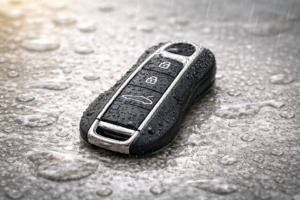
One of the most common sources of malfunction is moisture. Even a small amount of water can damage internal components.
What to do if the key gets wet
Remove the battery immediately (if possible) and dry it thoroughly. Never dry the key with a hot air stream or in a microwave oven.
How to dry it properly
Place the key on a dry cloth and leave it at room temperature for at least 24 hours. You can use silica gel packets to absorb moisture.
When to contact a specialist
If the key doesn’t work after drying, contact an automotive electronics specialist. Attempting to repair it yourself can damage the microchip.
How to store spare keys
A spare key is your security guarantee. However, it also requires proper care.
Safe locations
Keep the spare key in a dry, cool place, away from electronics and heat sources.
How to avoid signal cloning
If you have a “smart” key, do not keep it near your home’s front door. Criminals can use signal amplifiers.
The benefits of metal boxes (Faraday box)
Special boxes block signals, protecting against unauthorized scanning. This is especially useful in apartment buildings or large cities.
The most common mistakes when caring for car keys
Even careful drivers sometimes make mistakes.
Improper storage
Hanging keys together with heavy key bundles can damage the ignition lock.
Irregular battery replacement
Drivers often wait until the key stops working completely. This can disrupt signal transmission and the locking system.
DIY disassembly
Although “YouTube” tutorials are tempting, it’s better to avoid it. Internal components are extremely sensitive, and the smallest mistake can end up costing you a new key.
Professional solutions and services
In some cases, it’s best to leave the solution to professionals.
When it’s worth contacting a car service center
If the key doesn’t work after being dropped, getting wet, or due to a software error, contact specialists.
How to identify a trustworthy technician
Choose technicians who use original parts and provide a warranty.
Service prices and warranties
Prices depend on the car model, but professional maintenance always pays off—both in terms of safety and convenience.
What to do if you lose or break your key
A lost key is a common but solvable problem.
Emergency help
Contact an authorized service center or a mobile key specialist. Many of them come to your location.
Restoring a key copy
If you have a spare key, a new one can be made within a few hours.
The benefits of insurance
Some insurance companies cover part of the costs, so it’s worth checking your policy.
Evolving technologies in the key system (2025)
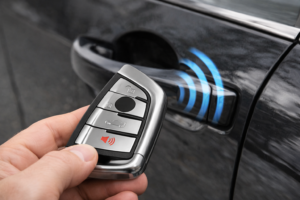
Technology is advancing, and so are car keys.
Digital keys and mobile app integration
You can now unlock your car using a smartphone. It’s convenient, but it requires security measures—use two-factor authentication.
Biometric security
Some models use fingerprint or facial recognition—this is a step toward complete security.
Contactless technologies
The popularity of “Keyless Go” systems is growing, but so is the risk of signal theft—so Faraday boxes are becoming a necessity.
Environmental impact and durability
The impact of temperature changes
High heat or cold can shorten battery life.
How to avoid corrosion
Avoid storing keys in damp places—metal parts may start to rust.
Ensuring durability
Regular maintenance, cleaning, and replacing the battery at least once a year will ensure the key works for many years.
How to care for keys in winter
Protection from cold
Cold can thicken the lubricant in the ignition lock and weaken the signal. Use silicone spray to lubricate the lock.
Condensation prevention
After entering a warm room, don’t keep the key near heat sources—let it warm up naturally.
Practical winter tips
Keep a spare battery in the car and a protective case against moisture—this will help avoid unexpected problems.
FAQ – Frequently asked questions
1. How often should the key battery be replaced?
Every 12–24 months, depending on frequency of use.
2. Can I dry the key with a hair dryer?
No—it can damage the microchip. Let it dry naturally.
3. Why does the key only work from up close?
Most likely the battery is running low, or the signal is being interfered with by an electromagnetic field.
4. Can I use a non-original casing?
Yes, but only from reputable suppliers. Cheap options may not meet durability standards.
5. What to do if the key gets stuck in the lock?
Do not use force—try gently wiggling it or contact a specialist.
6. Is it possible to program a new key yourself?
For some models—yes, but most often professional equipment is required.
Why car key maintenance pays off
Car key maintenance may seem like a small thing, but it determines reliability, safety, and comfort. A properly maintained key lasts a long time, and you avoid unexpected expenses. Take care of your key the same way you take care of the car itself—it’s an investment in peace of mind and safety.